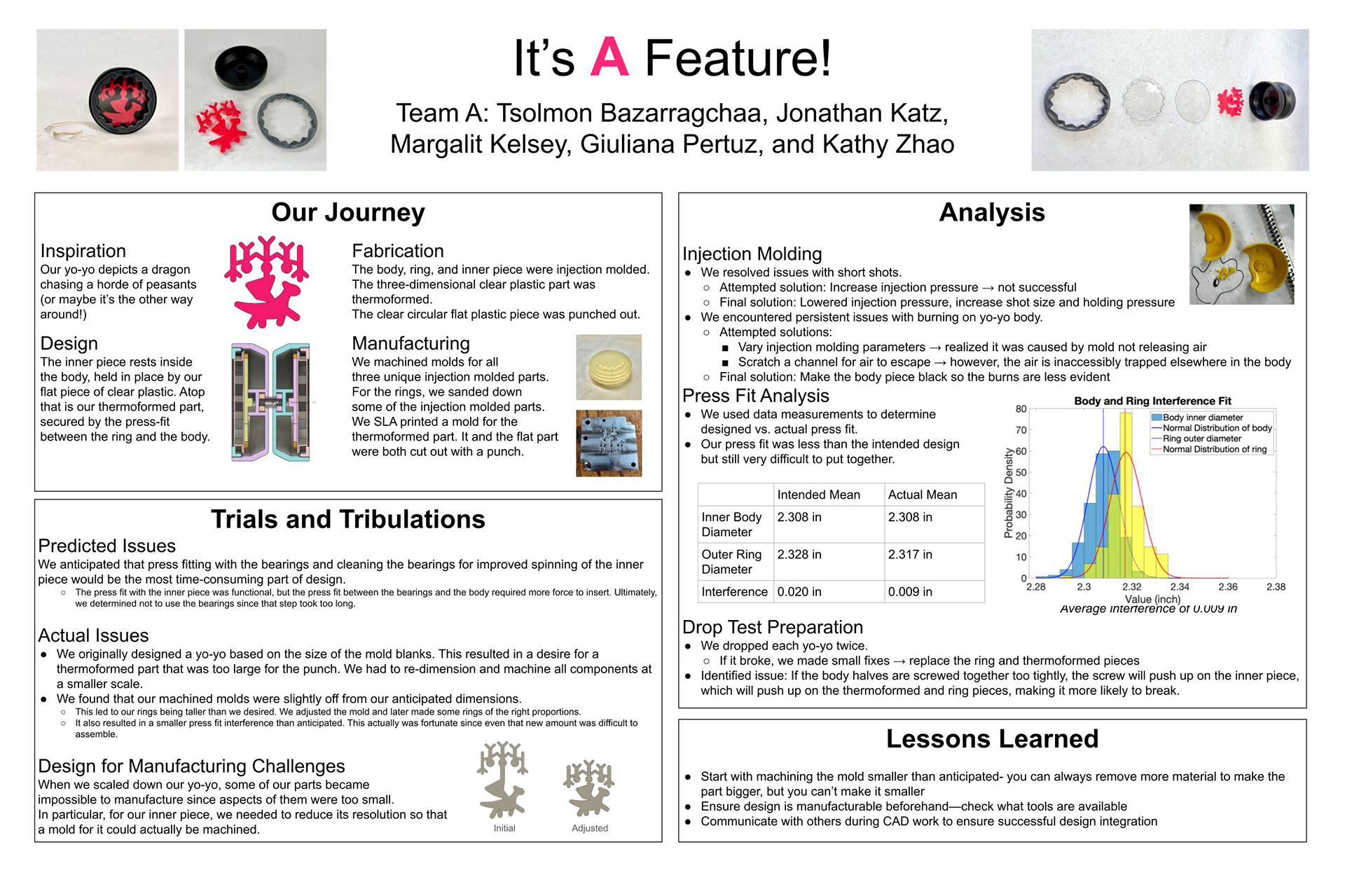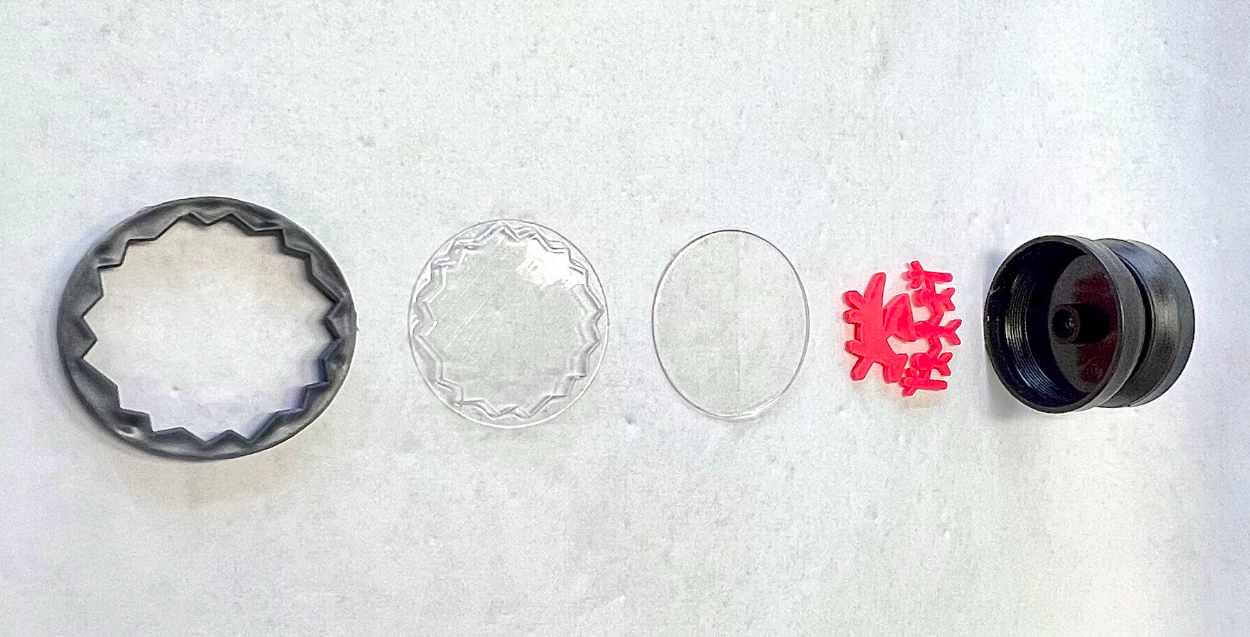
Assembly architecture
Five primary product components had to assemble consistently while preserving the visual concept and functional interfaces.
Exploded view of the five main yo-yo components.
A semester-long, five-person design and manufacturing project culminating in a production run of more than 50 functional yo-yos. I owned the main injection-molded body from concept through CAD, CAM, mold machining, molding, and final production.
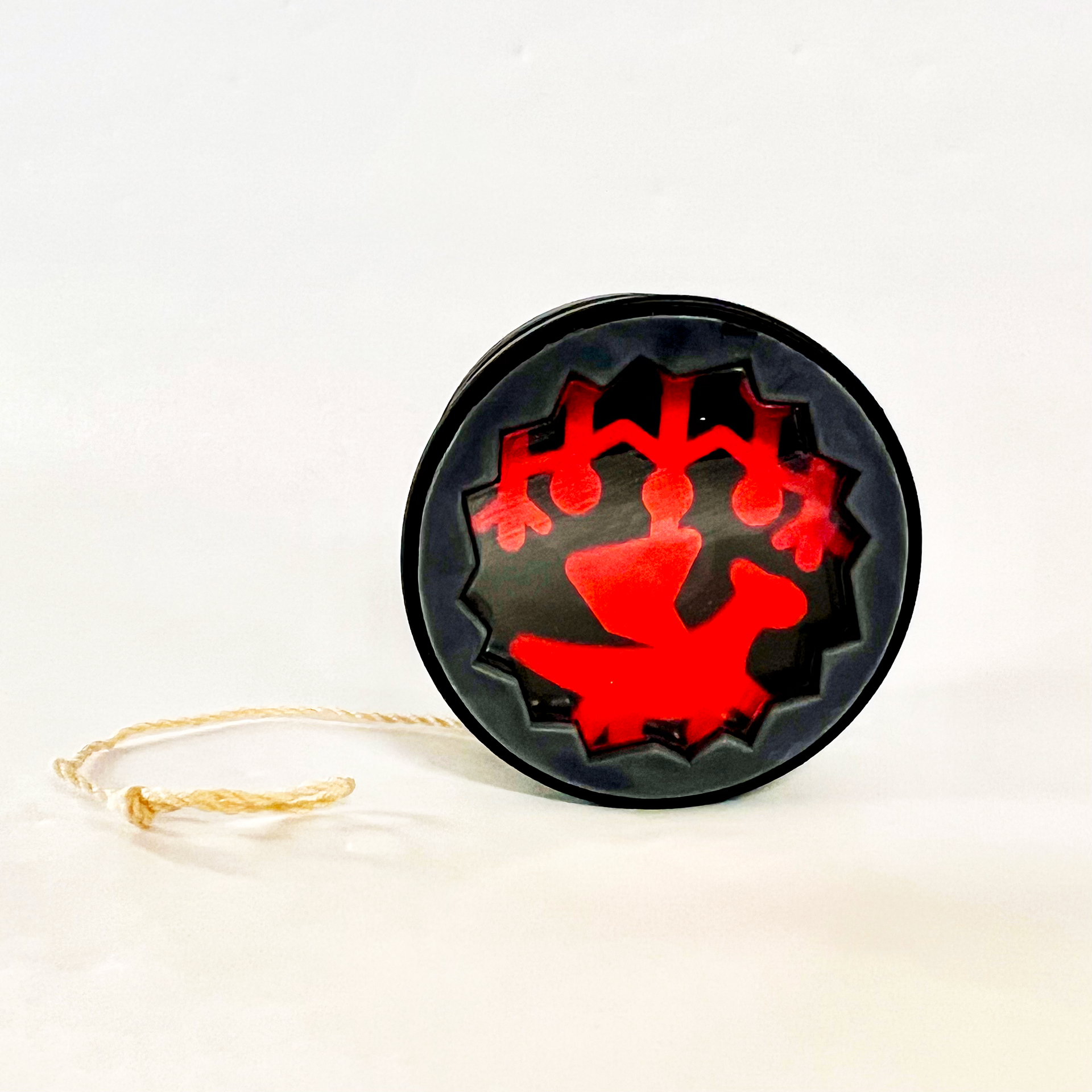
The project required a manufacturable product, production tooling, a stable molding process, assembly, and validation—not just a one-off prototype.
The yo-yo depicts a dragon chasing a group of peasants—or perhaps the peasants are chasing the dragon—across a rocky landscape.
My primary responsibility was the black main body, which forms the structural foundation of the assembly and interfaces with the decorative components and hardware.
The finished yo-yo combined injection-molded, thermoformed, and punched plastic parts. The main body had to support the outer decorative assembly while accommodating the axle hardware and press-fit interface.
Five primary product components had to assemble consistently while preserving the visual concept and functional interfaces.
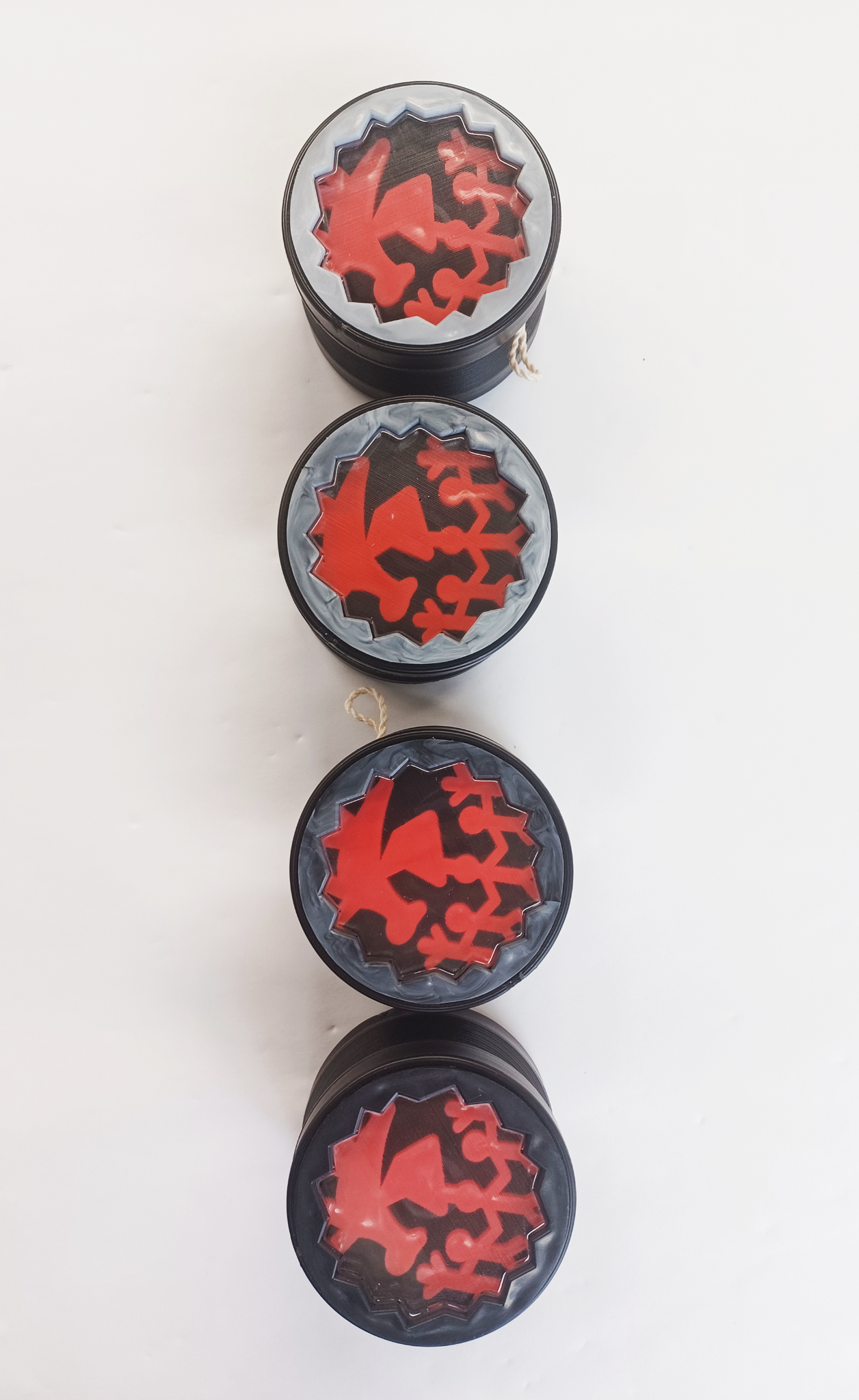
The design needed to be manufactured repeatedly, assembled consistently, and survive handling and drop testing across a run of more than 50 units.
After developing the part geometry, I generated CAM toolpaths and machined the aluminum tooling used to produce the body. I then helped set up and operate the injection molding machine during process development and production.
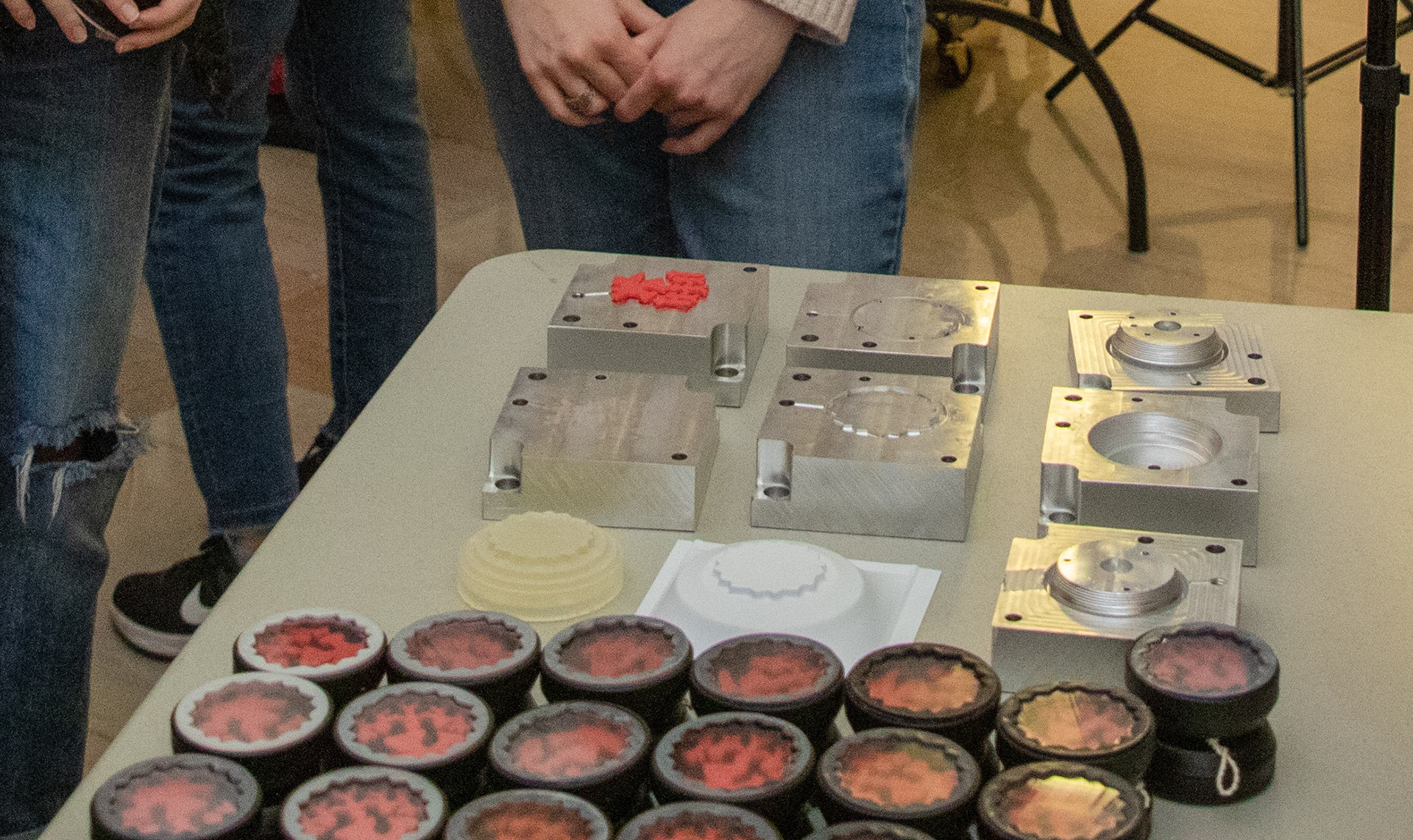
Early molding runs revealed the tradeoff between incomplete filling and defects from overly aggressive settings, while a punch-size limitation forced a mid-project product redesign.
Prepared the molding machine and tooling for production trials.
Initial settings produced incomplete parts and exposed process limits.
Iterated on pressure, shot size, and holding pressure while monitoring quality.
Balanced fill quality against burning from trapped air to reach repeatable production.
The available punch for the clear plastic components was more restrictive than the mold blanks. I helped scale down and simplify the yo-yo so it could be manufactured with the equipment actually available.
The revised architecture reduced the number of press-fit interfaces and allowed the punched clear disk to retain multiple components.
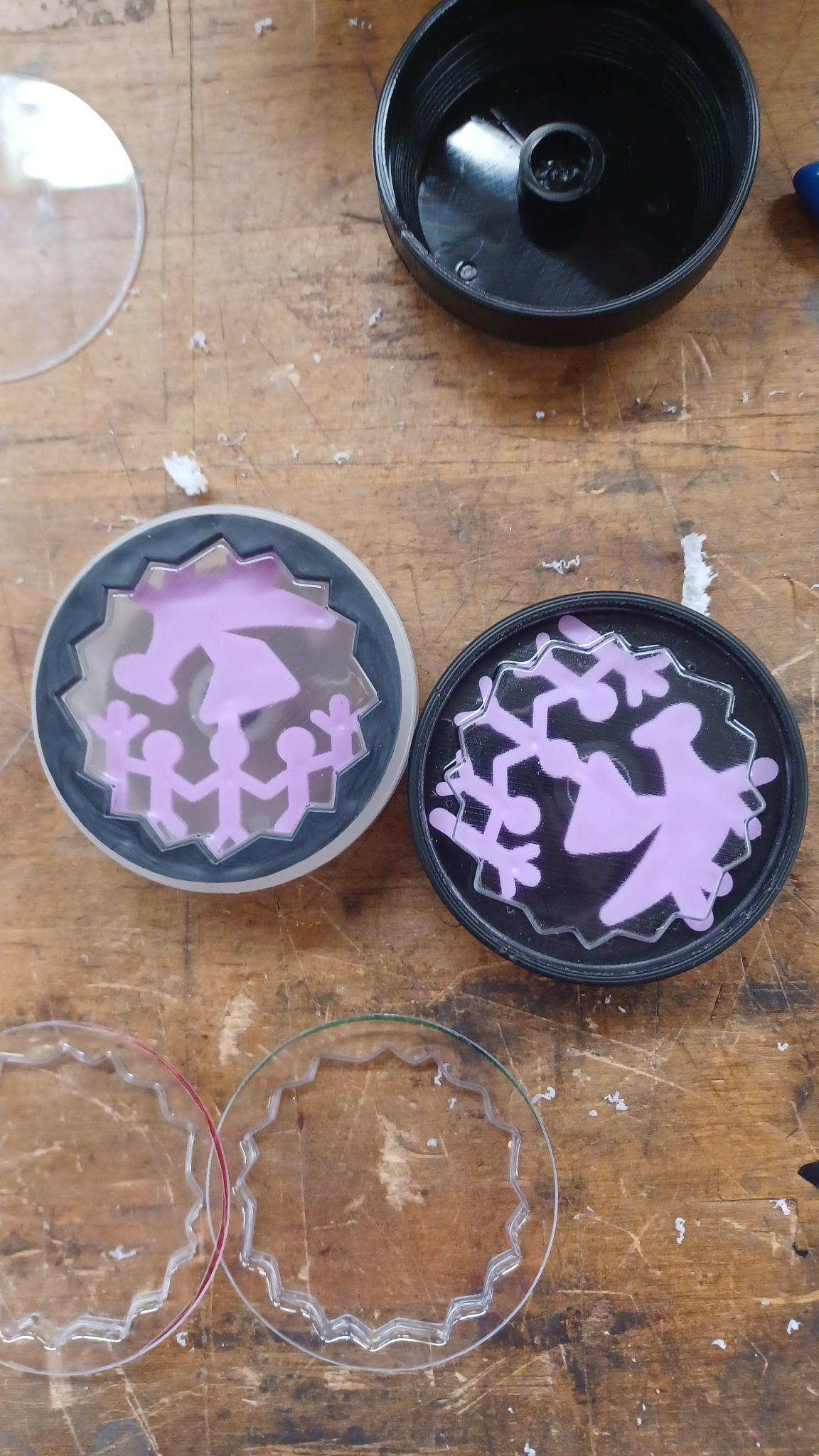
I participated in final assembly and drop testing to identify weak points and confirm that the revised design could survive normal handling.
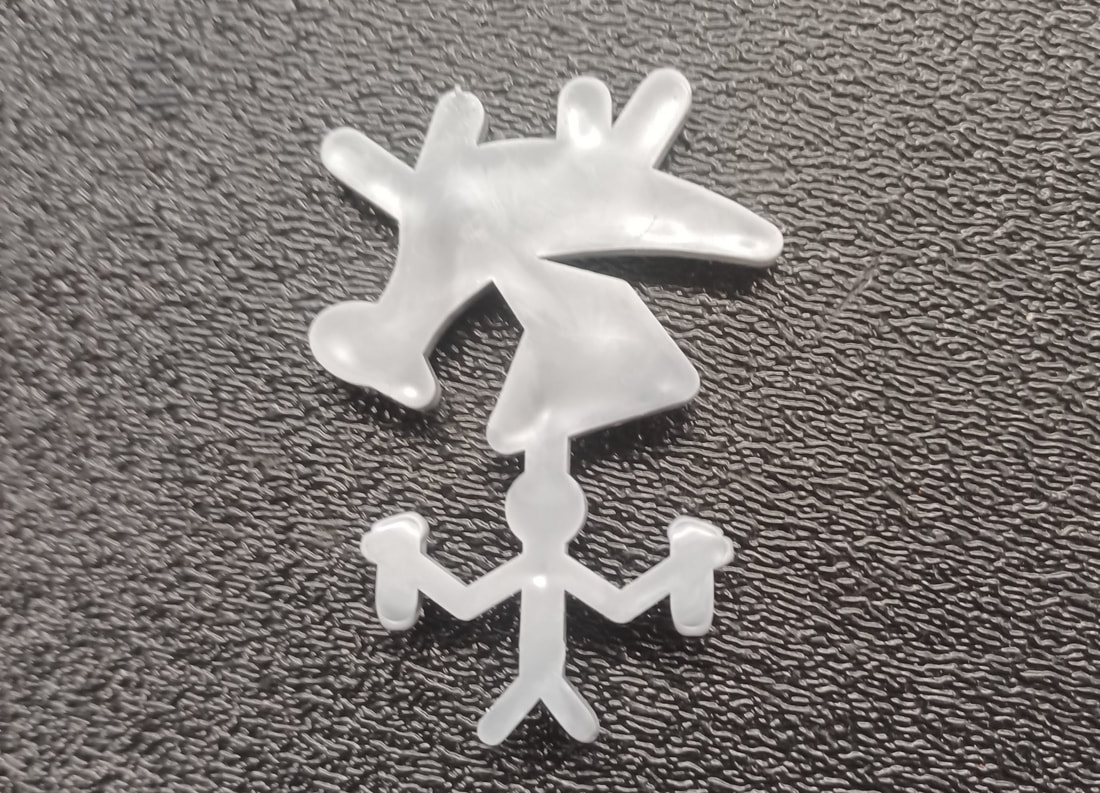
Our final poster documented the full team design, manufacturing process, press-fit analysis, injection-molding troubleshooting, and lessons learned.